


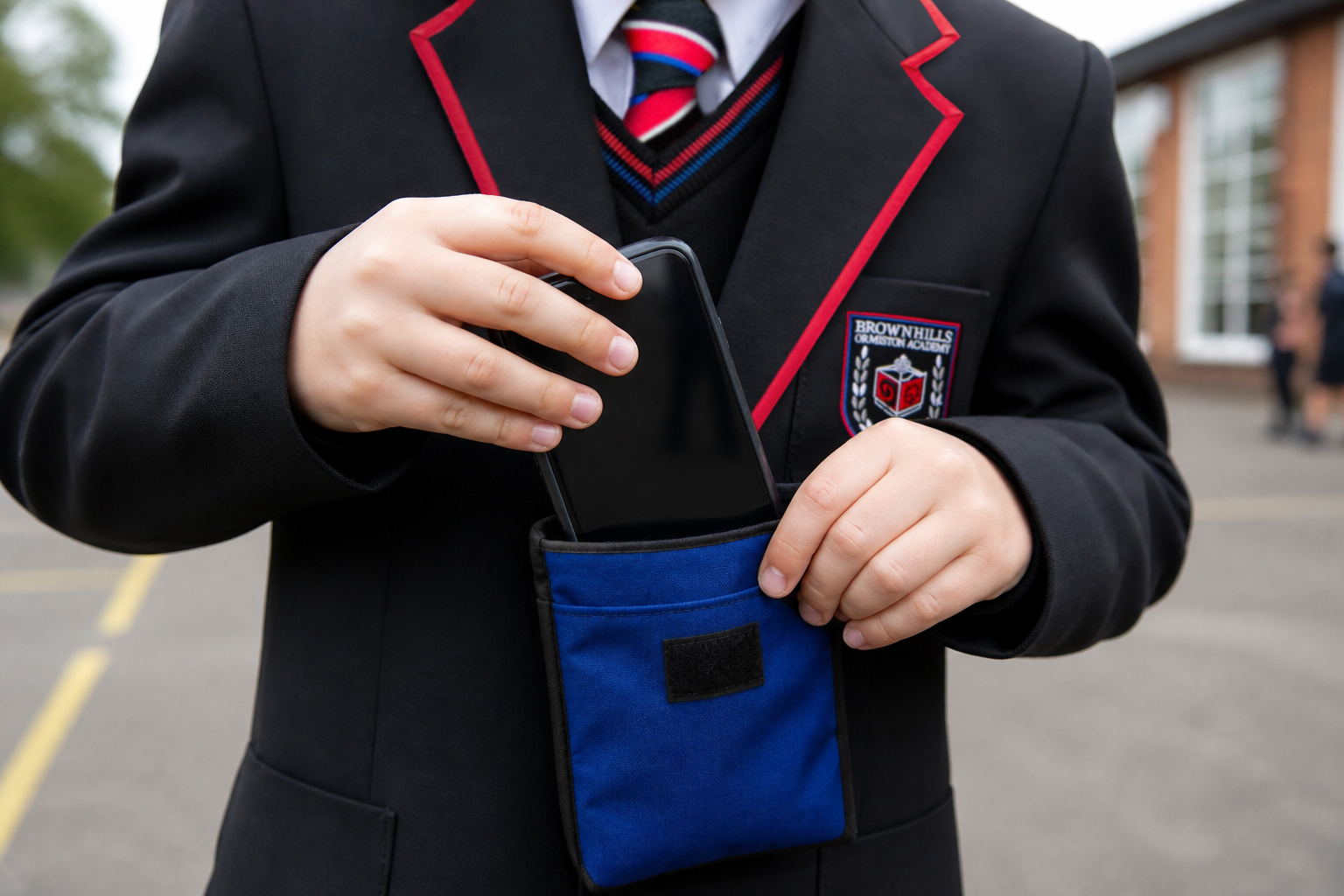
A University of Birmingham study has shed important light on how schools and families can better support children’s digital wellbeing. The study found that while phone bans during the school day do successfully reduce in-school phone use, some students in schools with bans compensated by using their phones more outside of school, meaning the broader picture is more complex than a simple ban can address.
The good news is that this research points society in a productive direction. The study’s lead author, Dr. Victoria Goodyear, made clear that the findings are not “against” smartphone bans – rather, they highlight that bans in isolation are not enough, and that “we need to do more.”
Ross, Principal of Brownhills Ormiston Academy, featured in the article, shares how students lock their smartphones away in pouches at the beginning of each school day. He explains how the bans remove temptation for students, allowing them to focus on learning as well as on face-to-face contact and social interaction. The BBC also spoke to students at Brownhills to hear their perspectives, including pupils reporting better social interactions.
Campaigners and researchers alike are now calling for a joined-up approach involving parents, schools, and government working together – a promising sign that the conversation around children’s digital health is becoming richer and more solutions-focused.